How it’s built.

This is the part of the site for the people who’ll run it. Everything between your data and the people who need it, opened up: five modules, one copy of the data, and the tradeoffs we made on purpose. Go as deep as you want.

1 · Sources
SaaS and APIsHubSpot, Salesforce, Workday, NetSuite, Rippling…
DatabasesPostgreSQL, SQL Server, MySQL, Oracle, Snowflake
FilesSharePoint, SFTP, OneDrive, cloud storage, PDFs
DatabricksUnity Catalog, read in placepreview
2 · Connectors
Live or syncedQuery a source the minute it’s connected. One button turns it into a scheduled pipeline.75+ connectors
about 30 arrive modeled
3 · Store and run
Databasin SailOur engine, written in Rust on Apache DataFusion. Runs your Spark code. Starts in seconds and scales to zero when idle. Spark ConnectSpark SQLJDBC / ODBClive sources
LakehouseOpen Iceberg and Delta tables in your cloud storage
OLTP modecoming soonComing soon: a Postgres database on the cluster, joined live to the lake
4 · People
Data AppsBuilt by asking, live on every view
Databasin OnePlain-English answers, SQL attached
AgentsReports that run on a schedule
BI tools and notebooksTableau, Power BI, PySpark
Your appsAny Postgres drivercoming soon
Across all of it: one set of table and column permissionsevery query loggedopen formats, never locked in
01

Connect: live sources & pipelinesQuery it now, or sync it for keeps. Your call, per source

Query it now. No sync.

Connect a supported source and it appears as live tables the moment credentials pass. SELECT * FROM live.hubspot.contacts runs directly against the API, so you get a first insight in minutes with zero pipeline to build. Your databases federate the same way. Built for exploration and quick answers.

Sync it for keeps.

One button builds the pipeline: schema mapped, schedule set, changes tracked. Data lands in your own lakehouse with full history, fast queries at any volume, and pre-built gold views for the 30 native sources. Use this once you rely on the data every day.

Both lanes run on the same connector: schema-aware, probe-validated, built to understand the source's actual data model. The Epic connector knows Chronicles, Clarity, and Caboodle as distinct environments. On Workday, business objects and effective-date logic are resolved before your data ever lands.
30 native, zero-config sources
Epic, Workday, Salesforce, Sage Intacct, HubSpot, Marketing Cloud and more, all with certified routes and the semantic model included.
Everything else still connects
Generic REST/SOAP with a no-code API builder, plus JDBC for databases. Any HTTP endpoint becomes a source. No engineering ticket.
Schema drift stops at bronze
Upstream changes are versioned and absorbed at the raw layer, so they never cascade into your reports at 2am. Pipelines adapt instead of failing.
Incremental by default
Watermarks, change-data-capture, retries, and full run history on every pipeline. Your OLTP systems never get polled for analytics.
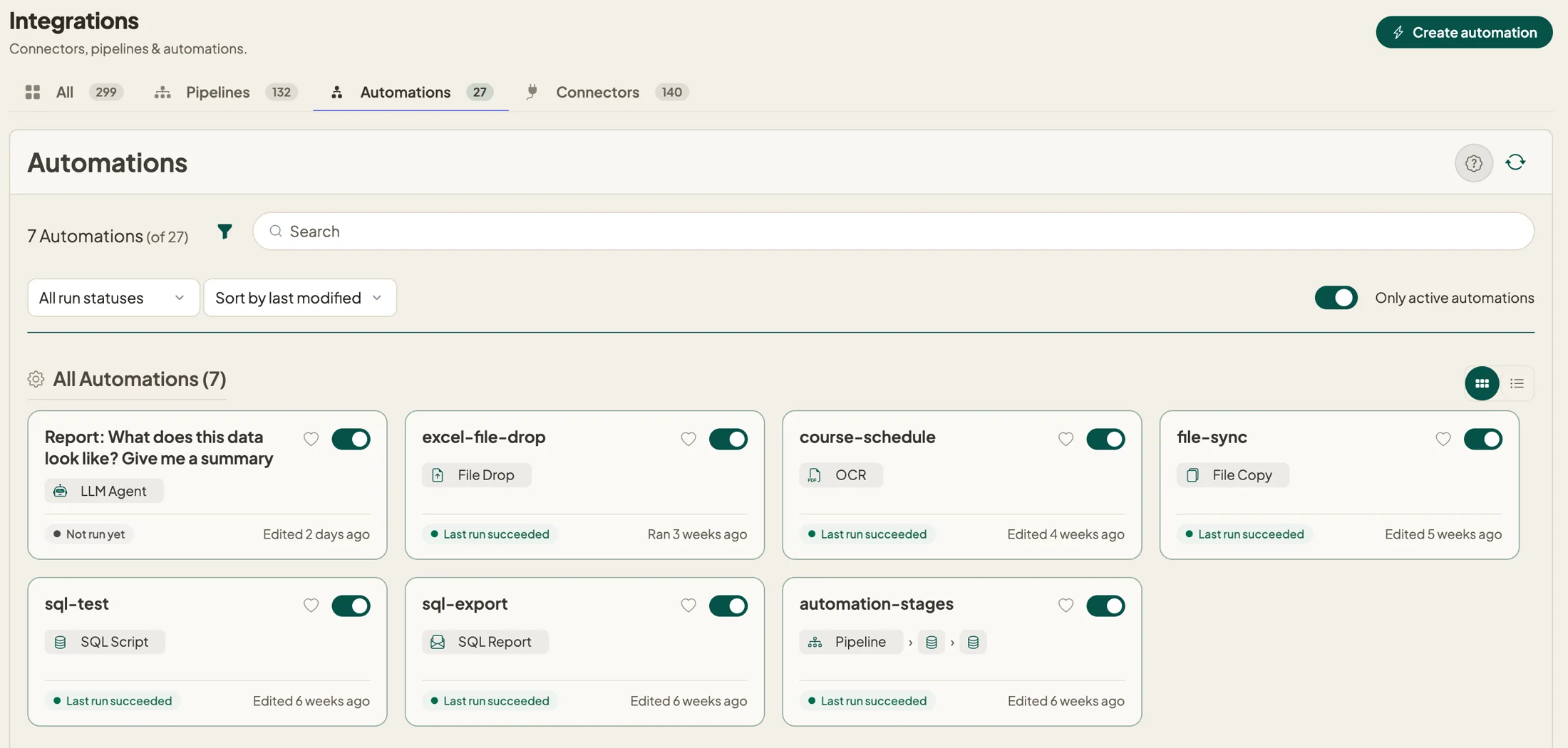
Databasin automations: each card is a scheduled job with its task type and last run status
Automations: each one a schedule, with its last run right on the card
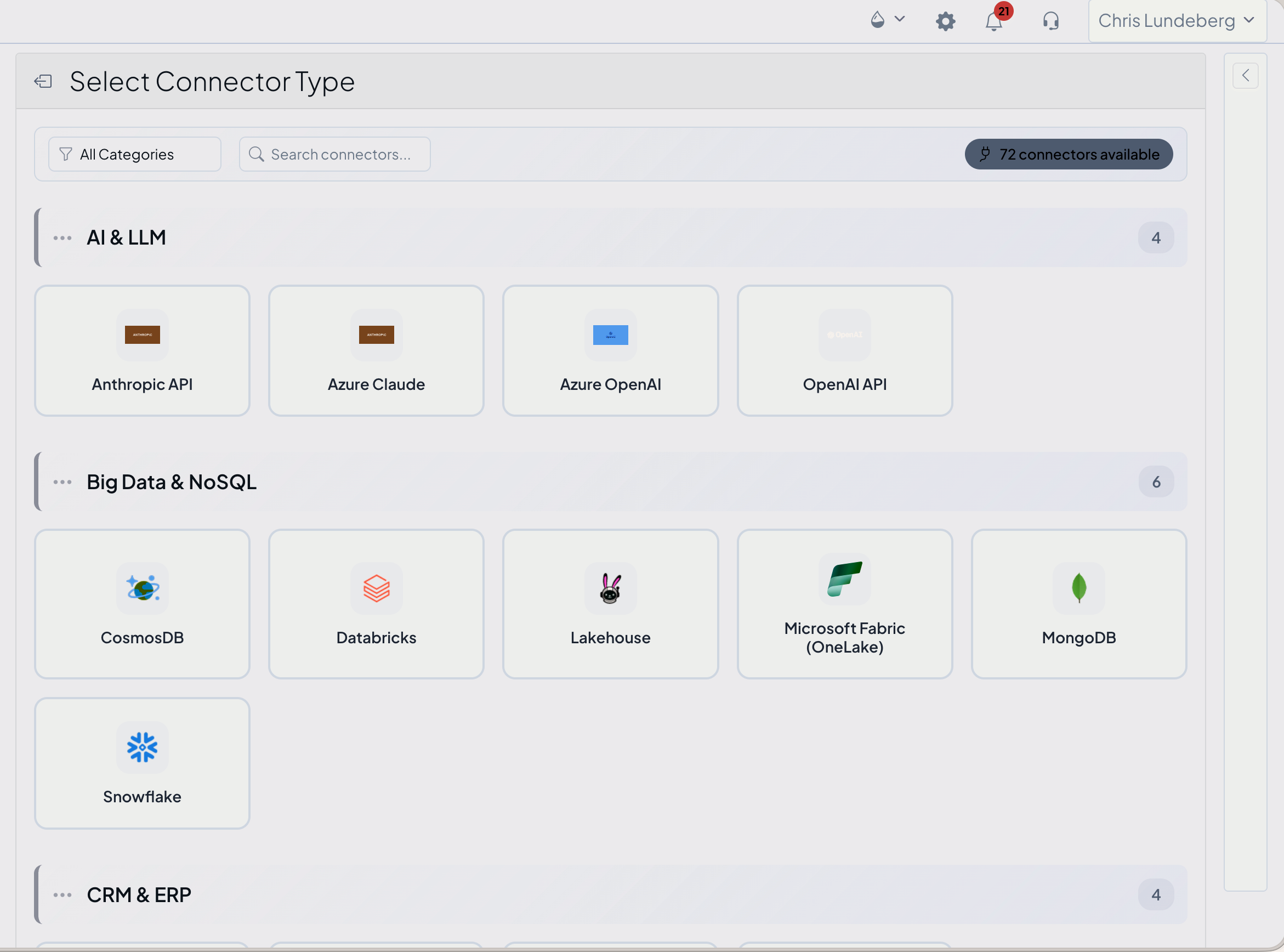
Databasin connector catalog: 75+ pre-built source connectors in one library
The connector catalog, 75+ sources in one library
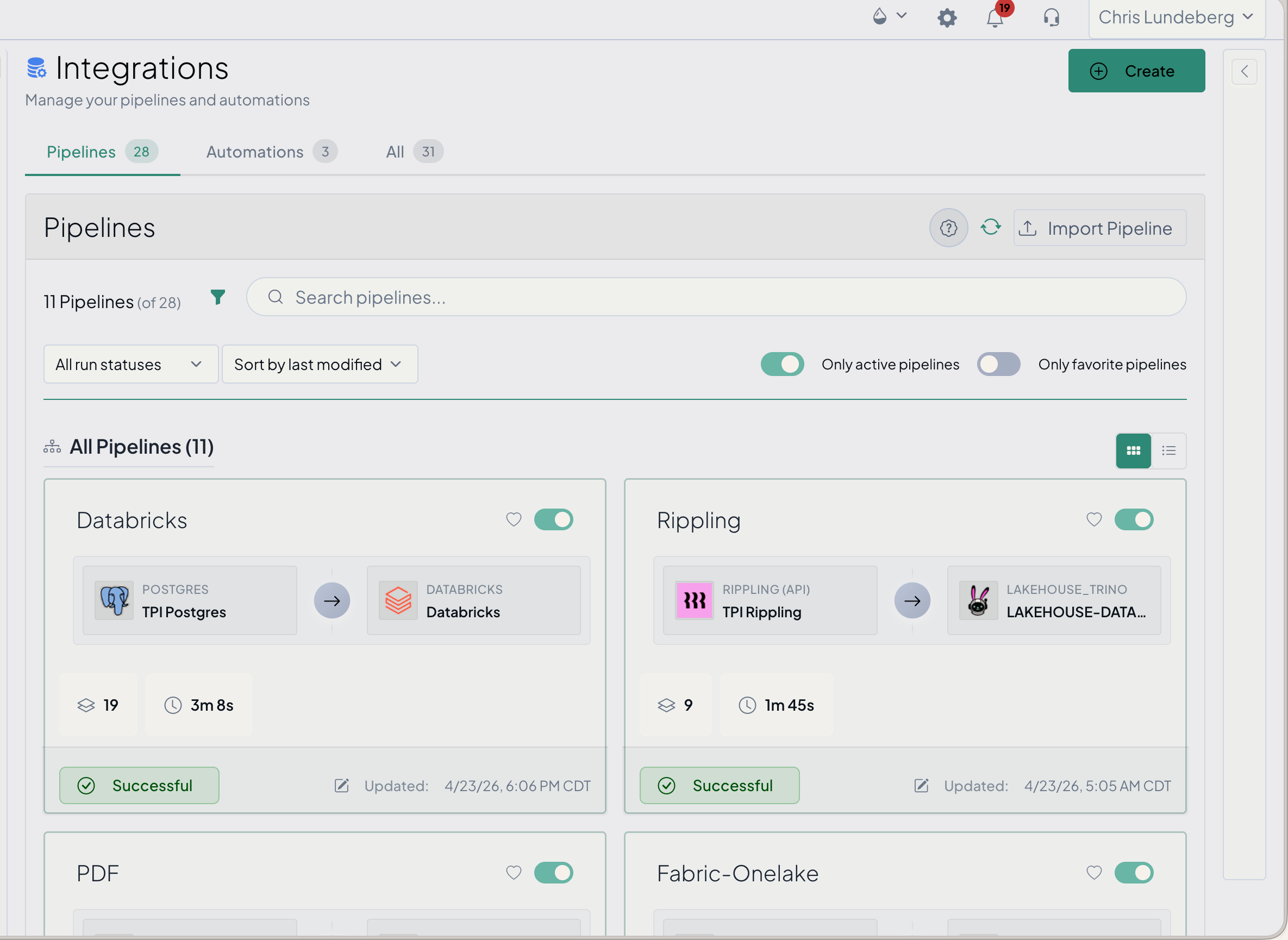
Databasin pipelines dashboard showing run statuses and source-to-target wiring
Pipelines with run status, schedules, and source-to-target wiring

Replaces CData · MuleSoft · Fivetran · custom API scripts

ETL and ELT pipelines →  ·  What a native connector handles for you →

Live sources are rolling out across the native connectors now. The product shows you exactly which of your sources support live; everything supports sync. Browse all connectors →

02

Automate: the work engineSQL, dbt, notebooks, and AI agents, chained into stages

Connecting brings data in; Automations put it to work. A full orchestration engine built into the core, not a bolt-on. Tasks chain into stages: tasks in the same stage run in parallel, and stages run in order. The whole board then runs on a schedule or a trigger, with retries, per-task logs, and versioned snapshots of the automation itself.
SQL & dbt, first-class
Schedule plain-SQL transforms on any engine, or point a task at your dbt Core repo. Databasin generates the profiles and reports per-model status back.
Notebooks on the lake
PySpark, Python and SQL run directly against governed tables. Data scientists work straight on governed tables.
AI agents as tasks
A skill is plain-English instructions, declared inputs, a read-only tool allow-list, and per-run bounds, dropped into a stage. Anyone can author one; every run is audited. Agents, in full →
Semantic models in plain English
Describe the model you need; Databasin drafts it from your schemas, you refine it on a canvas, and gold views materialize from it.
Delivery built in
Results ship to email, Slack, or Teams, or write back to tables and external systems. That's reverse-ETL without another vendor.
Drives what you already own
External systems become stages in the same workflow: trigger Databricks jobs, hit APIs, fire webhooks.
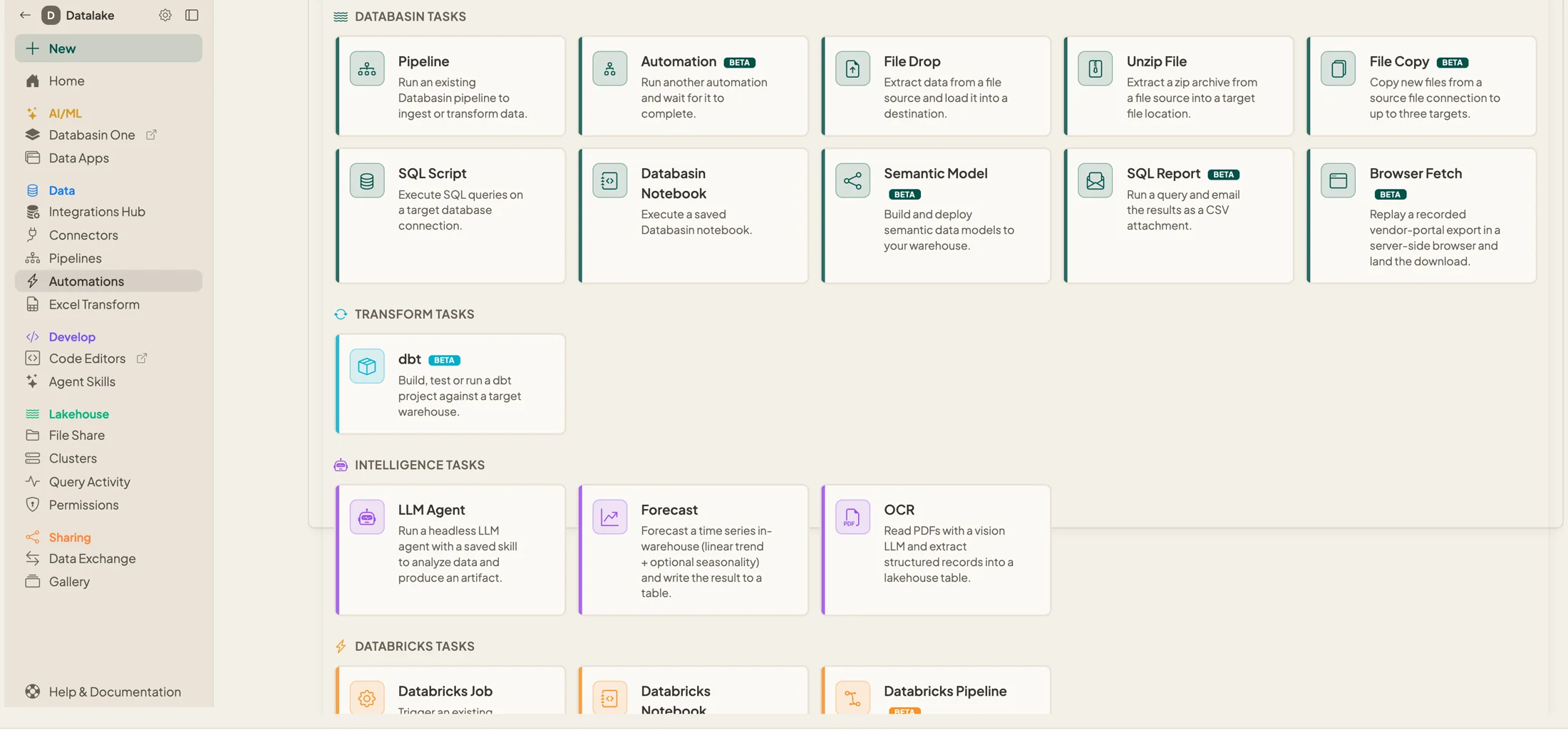
Every task type an automation can run: pipelines, SQL scripts, notebooks, file drops, dbt, LLM agents, forecasts, OCR and Databricks jobs
Every task type on the menu: pipelines, SQL, notebooks, dbt, agents, forecasts, OCR, Databricks jobs

Replaces Airflow / Dagster · dbt runners · Hightouch / Census · cron & scripts

Every task type an automation can run →

03

Store & query: the open lakehouseopen Apache Iceberg · Trino & Databasin Sail · zero copies

Synced data lives in Apache Iceberg, a vendor-neutral open format readable by any compatible engine, now and in the future. No exit tax, ever. Pipelines and automations move it through three governed tiers, and your gold layer is built from the questions you actually ask:

Bronze
Raw, as-ingested. Full history, nothing dropped.
→
Silver
Cleaned, typed, deduped, conformed.
→
Gold
Curated business views: joins, keys, definitions. What you query, and what the AI answers from.

One lake, no copies. Databasin Sail runs SQL and Spark on it, and Trino reads the same tables if you prefer ANSI SQL. Managed clusters bill per node-minute and cost nothing when stopped; access control runs per user, per catalog, per schema. And one Trino query can join it all: synced gold tables, live sources, and federated databases in a single statement.

Trino
Interactive SQL & federation
Low-latency, ad-hoc analytics against gold tables. Add live sources and federated Postgres, MySQL, SQL Server, Oracle, MariaDB, or Snowflake, joined in one statement. The engine behind dashboards and the SQL editor.
Databasin Sail
Spark-compatible, built by us
Our own engine, written in Rust on Apache DataFusion. PySpark and Spark SQL connect over Spark Connect and run unchanged: notebooks, heavy transformations, interactive queries. Reads and writes Iceberg and Delta, joins live databases, serves BI tools over JDBC and ODBC, and scales to zero between queries.

OLTP mode coming soon will put a PostgreSQL database on a Sail cluster for applications that write all day. Sail will read it as a live catalog, so one query can join this minute's rows to years of lakehouse history.

Also available: Apache Doris and DuckDB on the same tables, for teams that already rely on them. BYO mode layers Databasin onto your existing Databricks, Snowflake, or Fabric instead of replacing it.
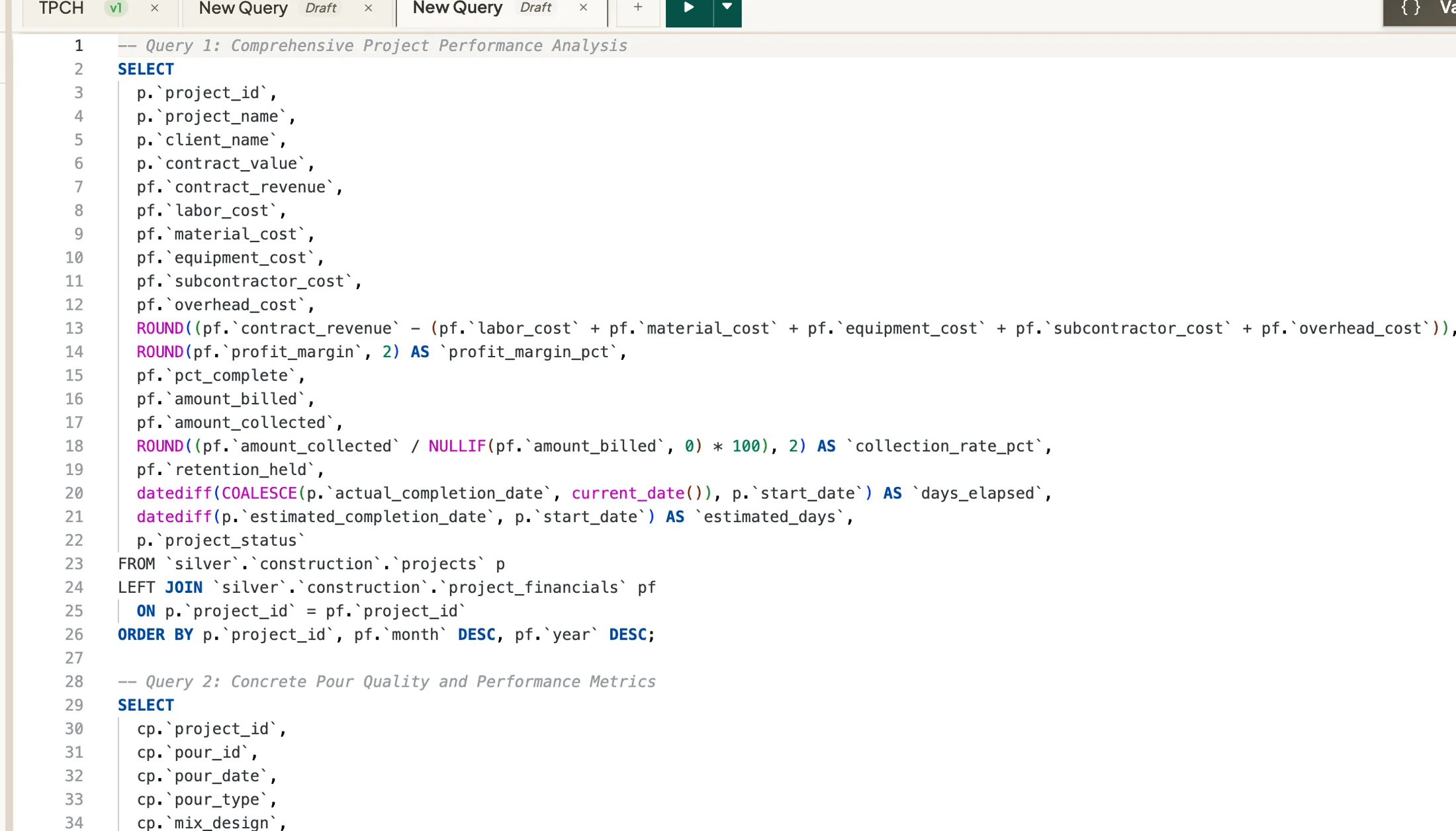
The Databasin SQL editor with tabbed, versioned queries against silver-layer tables
The SQL editor: tabbed, versioned queries, one surface for every engine
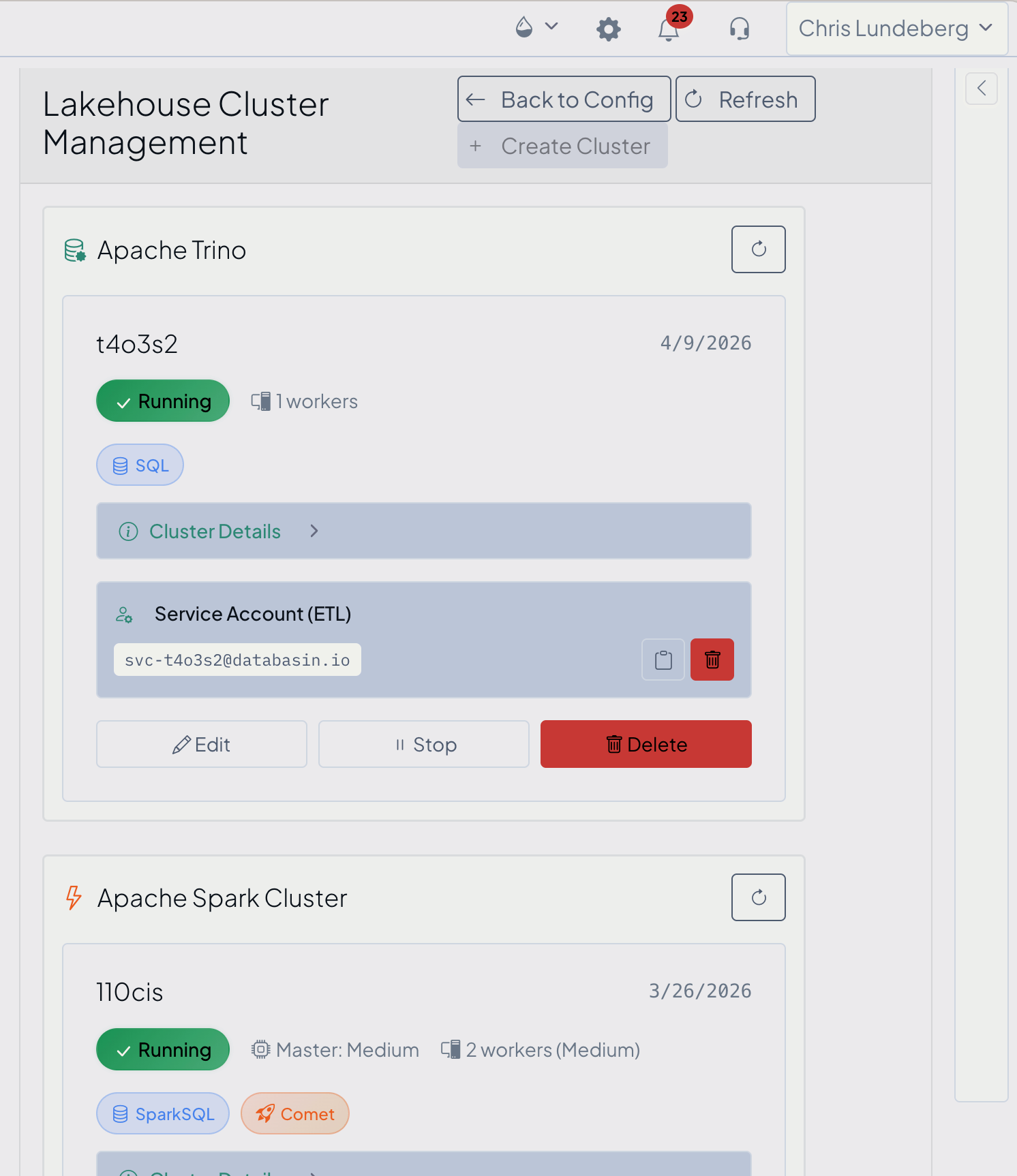
Databasin cluster management: Trino and Spark clusters, fully managed
Cluster management: per-minute billing, and stopped clusters cost nothing

Replaces or overlays Snowflake · standalone Databricks · Azure Synapse · BigQuery

The open lakehouse →  ·  Databasin Sail, in depth →

Every engine on one Iceberg lakehouse (docs) →

04

Ask: Databasin OneThe AI layer: answers with the SQL attached, charts, documents, agents

The AI layer is architecturally constrained to your governed data. It can't hallucinate against raw tables because it never sees them. It's also LLM-agnostic: GPT and Claude models via Azure OpenAI, or your internally approved model, running inside your security boundary. We built the permissions first and the AI on top of them.
Answers with the SQL attached
Every answer ships the SQL it ran and the tables it touched. Trust it, or check it. Either way, no arguments about whose number is right.
Documents cite the page
PDFs and documents are chunked and embedded inside Databasin. Nothing leaves. Ask a question, click the citation, see the highlighted source page.
Data Apps
Describe a dashboard, or upload a Power BI or React one, and get a live app that re-runs its queries as each viewer, with their permissions. Change it by asking. Data Apps →
Documents & spreadsheets out
Executive PDFs with embedded charts, Excel exports, and narrative summaries, each one generated from live data and deliverable on a schedule.
Agent skills, versioned
Skills are managed like code: versioned, shareable, admin-curated. Teams run them with one click; automations run them on a schedule.
Guardrails you can audit
Agents get read-only tools, query budgets, and row caps. Every run writes an audit trail of what it read, what it ran, and what it produced.
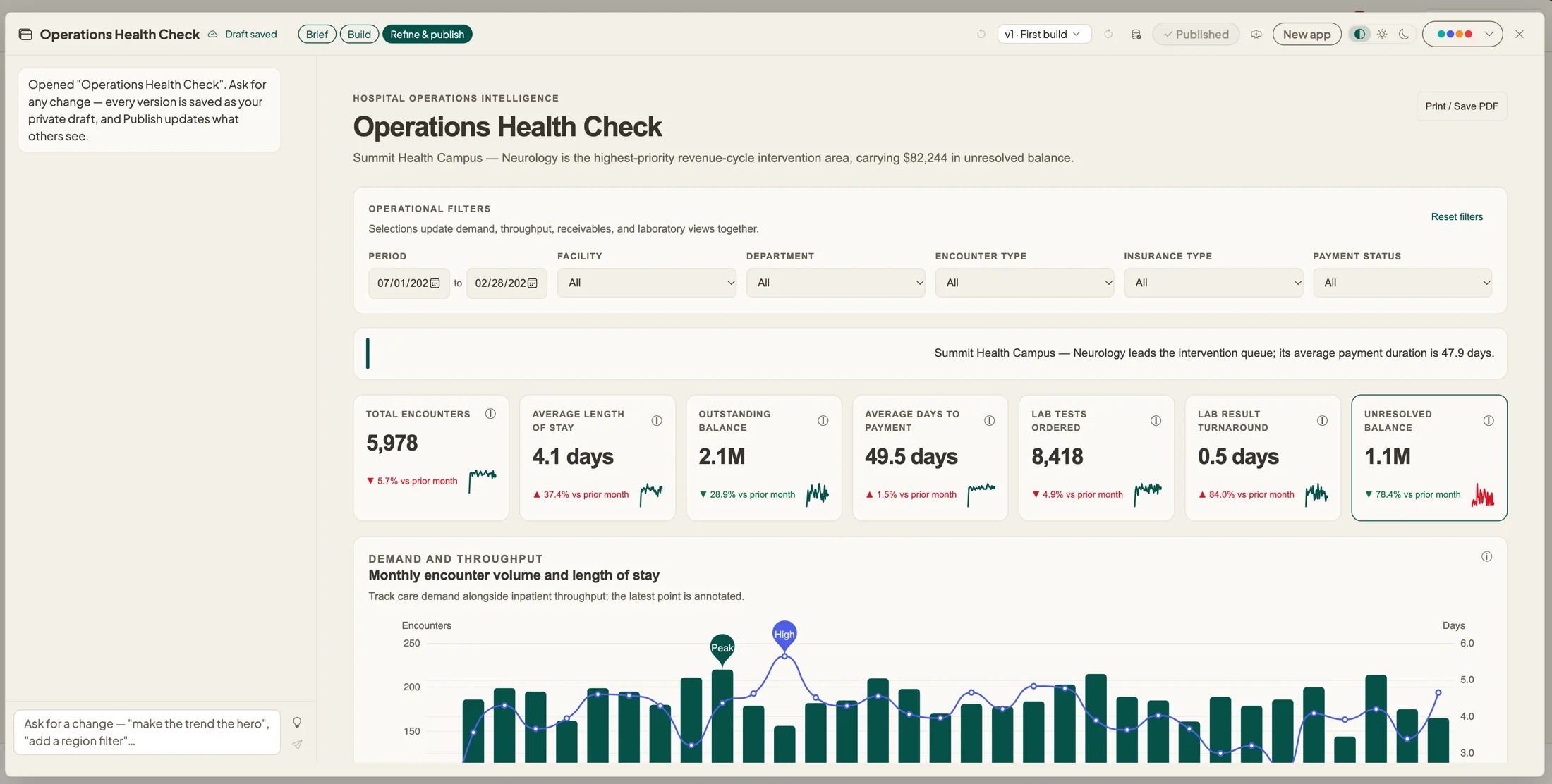
A Data App called Operations Health Check: filters, KPI cards with trends and a monthly demand chart, with the chat that builds it on the left
A Data App, built by asking. Every version is a private draft until you publish

Replaces Tableau · Power BI Premium · Looker · standalone AI API spend

All about Databasin One →

05

Trust: governance & securityHIPAA-ready, encrypted, audited. Trust by architecture

Databasin was co-created at Washington University School of Medicine, where the data was live, regulated PHI from day one. The first data it ever handled was PHI, so it starts locked down and you open access up as you need it.
Encrypted & audited
Encryption in transit and at rest, full audit trails, SSO and role-based access control on every deployment.
Access control where the data lives
Permissions at the catalog, schema, and row level, enforced by the engines rather than by the BI tool's honor system.
AI inside the boundary
The model queries governed gold data only, and runs inside your security perimeter. Sensitive records are never shipped to an external AI service.
Your tenant, if you need it
Databasin Private puts the same product inside your own Azure tenant. Your network, your keys, your policies, no data egress.
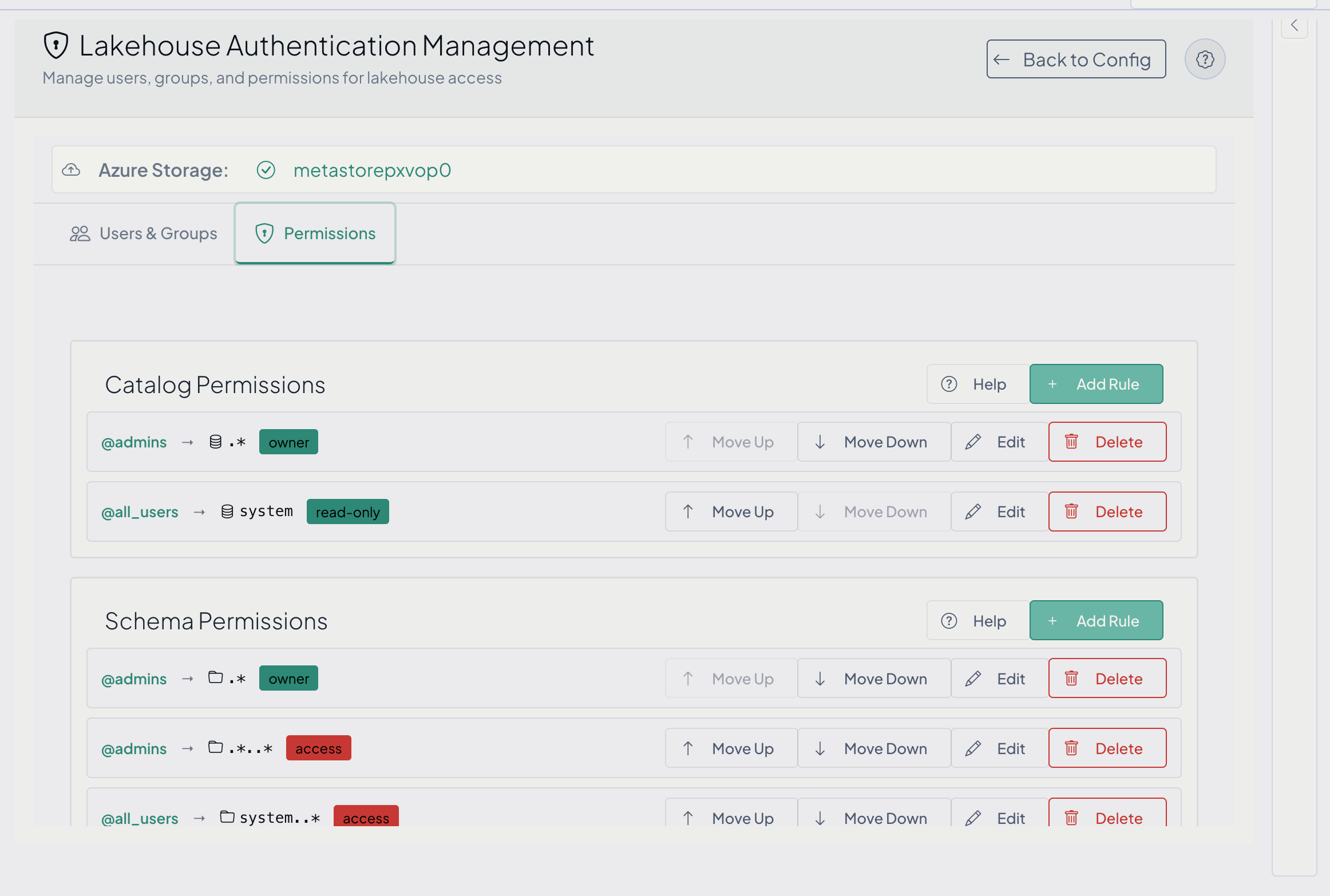
Databasin governance: catalog and schema permissions, users, groups, and roles
Governance: catalog & schema permissions, users, groups, roles

Why we built it this way

Open

Your tables are ordinary Iceberg on Parquet, an open format every major engine reads.

→ Nothing is in a format only we can read. On Databasin Private, the files also sit in your own storage account.
Pluggable

Sources, engines, agent skills, and destinations plug in and swap out without re-platforming. Full stack or single module, your call.

→ Run Trino or Databasin Sail on the same tables without moving a byte.
Secure

Private install in your own Azure tenant when you need it. Your LLM, your endpoints, your governance rules. PHI never leaves your environment, by architecture, not by policy.

→ On Databasin Private, PHI never leaves your tenant because there is no path out of it.
Intelligent

The AI layer queries governed gold views, and only those. Governed data in, trusted answers out.

→ The analyst holds a SELECT-only role against gold views. There was never a raw-table mode to turn off.

HIPAA-ready by default.
Your security posture, your call.

Every deployment is encrypted, audited, and access-controlled. The hosted cloud is fully HIPAA-ready, and most teams start there in five minutes. For the strictest PHI and data-residency needs, run the same product inside your own Azure tenant.

The fast path.

Fully managed and HIPAA-ready from day one. Sign up, click a connector, and you're querying in minutes. $50 in credit, no card.

Start Free

Strictest posture.

Install from the Azure Marketplace and all of Databasin sits inside your walls. Your storage, your keys, your network, no data egress. Unlimited seats.

Talk to us about Databasin Private
⬡HIPAA-ready
⬢Encrypted in transit & at rest
▤Audit · row-level security
⚷SSO · RBAC

Co-created at Washington University School of Medicine, where the data was real and regulated. Featured by Microsoft and Databricks at HIMSS '23, '24, and '25.

We still run every technical demo ourselves. Chris Lundeberg, one of our co-founders, would rather hear about your hardest data problem than show you a slide.

Book an hour with Chris